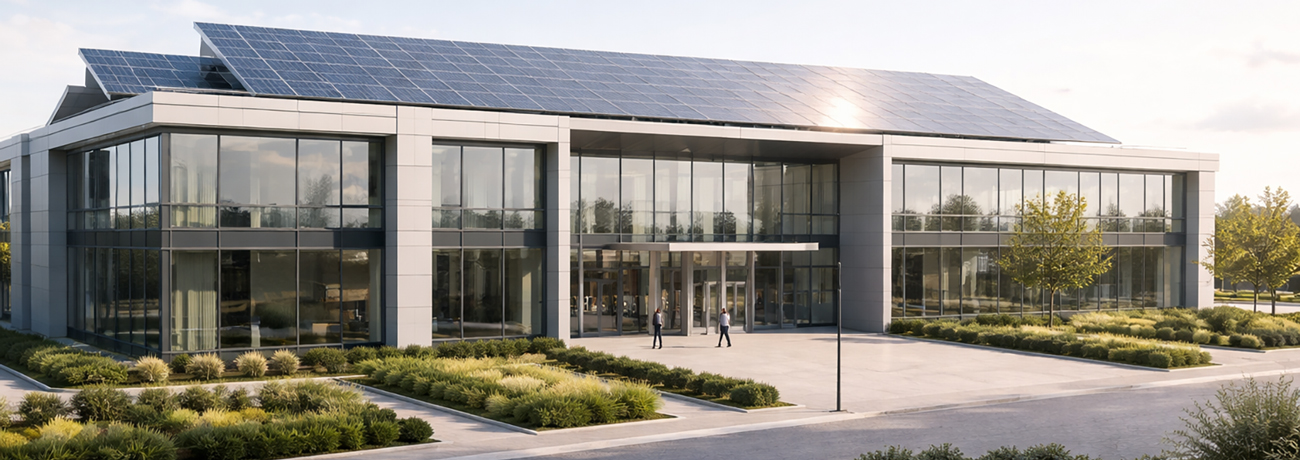
Large, open roof space is the obvious draw. Many warehouses have wide, uninterrupted surfaces that appear perfect for solar panels. From a distance, it can look like an easy decision. Plenty of space, strong daylight exposure, straightforward layout.
And in many cases, that is true. Warehouses can be well suited to solar. But the roof is only part of the picture. What matters just as much is how the building uses electricity across the day.
A big roof helps. It does not guarantee the best outcome on its own.
Warehouses tend to have quite varied usage patterns. Some run steadily through the day with lighting, conveyors, picking systems and office areas all active. Others have bursts of activity around deliveries and dispatch, with quieter periods in between.
If most of the electricity is used during daylight hours, solar can be a good match. The building uses the power as it is generated. If usage is concentrated early in the morning, late evening or overnight, the picture changes.
That is why it helps to look beyond total consumption. Timing matters more than many people expect.
Lighting is often one of the biggest contributors, especially in high-bay spaces where large areas are illuminated for long periods. Material handling systems such as conveyors and automated picking equipment can also draw steady power.
Then there is charging. Electric forklifts, pallet trucks and other equipment are common, and charging patterns can have a noticeable impact on electricity use. If everything charges at the same time, demand can spike sharply.
Offices, heating, cooling and IT systems add another layer. A warehouse may look simple, but electrically it often behaves like several different spaces under one roof.
Yes, though not always in the way people expect. Flat roofs are common on warehouses and can work well for solar installations. Panels are mounted on frames to achieve the right angle, which allows flexibility in layout.
Pitched roofs can also be suitable, depending on orientation and structure. South-facing sections are often preferred, but east-west layouts can still provide useful generation across more of the day.
What matters is not just the shape, but how much usable area is available once obstructions, access routes and structural limits are taken into account.
Structural capacity is one factor. The roof must be able to support the additional load safely. This is checked during the survey stage and can vary depending on the building.
Roof layout is another. Skylights, vents, plant equipment and access paths all reduce usable space. Even on large roofs, these details can make a noticeable difference.
Grid connection is often the less obvious constraint. Local network limits may affect how much generation can be installed or exported. In some areas, this becomes the deciding factor rather than roof size.
Most installations are planned to minimise disruption. Work is usually carried out on the roof, with access routes managed carefully. Deliveries, loading bays and internal operations continue as normal where possible.
Electrical work is coordinated to avoid interfering with key systems. This may involve staged installation or working around quieter periods.
The aim is to keep the warehouse functioning while the system is installed. With good planning, this is usually achievable.
They can, particularly where the warehouse uses a steady amount of electricity during the day. Lighting, conveyors and office areas often create a consistent load that aligns well with solar generation.
However, the impact depends on how well generation matches demand. If large parts of the day have low usage, or if demand peaks occur outside daylight hours, the effect may be less immediate.
Solar tends to work best when it supports an already sensible usage pattern.
In some cases, yes. Battery storage allows electricity generated during the day to be used later. This can be useful if the warehouse has evening activity or wants to reduce demand peaks.
For example, charging equipment in the evening using stored solar energy rather than drawing heavily from the grid can change the demand pattern. Whether this makes sense depends on how the warehouse operates.
Not every site needs storage. It depends on timing, not just total use.
Solar systems generally require little maintenance, but access should be considered from the start. Walkways and spacing between panels are usually included to allow safe inspection and cleaning.
Warehouses often have large roofs, so practical access becomes important over time. Monitoring systems help by showing performance, so issues can be identified without constant physical checks.
Once installed, the system tends to run quietly in the background.
Yes. Warehouses with very low daytime usage, heavy night-time operation, or significant grid constraints may find solar less effective on its own. Buildings with limited structural capacity or complex roof layouts can also present challenges.
In these cases, solar may still have a role, but it needs to be considered alongside other measures. Energy usage patterns, storage options and operational changes all come into play.
It is not about whether solar works in general. It is about whether it works well for that specific building.
Start with how the building uses electricity. Look at when lighting, equipment and charging systems are active. Identify peak periods and quieter times. That gives a clearer picture of whether solar will align well.
From there, roof suitability, grid connection and installation can be explored with more confidence. This avoids assumptions based purely on roof size.
Warehouses often make strong candidates for solar. The key is making sure the system matches the way the building actually runs.